Anxiety isn’t the enemy you think it is
Understanding the different faces of anxiety — and why some of it is exactly what you need.
We live in a culture that treats anxiety as a malfunction. Something to be eliminated, medicated away, or overcome through sheer willpower. But anxiety is one of the most ancient and intelligent systems in the human body. The question isn’t how to get rid of it — it’s how to understand it.
THE LANDSCAPE OF ANXIETY
Not all anxiety looks the same
Anxiety is an umbrella term covering a wide range of experiences. Clinically, different anxiety presentations have distinct patterns, triggers, and treatment approaches. Here’s an overview of the most common types:
GENERALIZED
GAD
Persistent, excessive worry about everyday matters — work, health, family — that feels difficult to control and is present more days than not.
SOCIAL
Social anxiety
Intense fear of social situations where one might be judged, embarrassed, or rejected. Goes well beyond shyness — can limit relationships and daily function.
EPISODIC
Panic disorder
Recurrent, unexpected panic attacks—sudden surges of intense fear with physical symptoms like racing heart, dizziness, or a sense of unreality.
INTRUSIVE
OCD
Unwanted intrusive thoughts (obsessions) + repetitive behaviours or mental acts (compulsions) performed to reduce distress. Often misunderstood as 'liking things clean.'
DEVELOPMENTAL
Separation anxiety
Age-appropriate in young children but diagnosable when excessive fear of separation from caregivers significantly disrupts daily life in children or adults.
SITUATIONAL
Specific phobias
Marked, disproportionate fear of a specific object or situation: heights, flying, needles, animals. Recognized as excessive but feels uncontrollable.
TRAUMA-LINKED
PTSD
Following a traumatic event, the nervous system can become locked in a state of ongoing threat response—flashbacks, hypervigilance, emotional numbing.
PERFORMANCE
Situational anxiety
Anxiety tied to specific high-stakes moments—exams, presentations, performances. Often adaptive at lower levels; problematic only when overwhelming.
WHAT WE GET WRONG
Anxiety is widely misunderstood
Some of the most common things people believe about anxiety are, at best, incomplete — and at worst, actively harmful to the people experiencing it.
MYTH
“Anxious people are just worriers. They need to relax and think positive.”
REALITY
Anxiety disorders are neurobiological in origin, shaped by genetics, early experience, and nervous system wiring. Telling someone to ‘just relax’ is like telling someone with a broken leg to ‘just walk it off.’ Effective treatment, therapy, and sometimes medication work. Dismissal doesn’t.
MYTH
“Anxiety is a sign of weakness or lack of resilience.”
REALITY
Some of the most high-functioning, sensitive, and conscientious people experience significant anxiety. It is not a character flaw. It often co-exists with deep empathy, intelligence, and a strong moral sense.
MYTH
“If you have anxiety, you should avoid the things that trigger it.”
REALITY
Avoidance is one of the primary mechanisms that keeps anxiety disorders alive. Exposure, done safely and gradually, often with therapeutic support, is one of the most evidence-based approaches to reducing anxiety over time.
THE CASE FOR ANXIETY
Some anxiety is exactly what you need
Here is the thing most anxiety content won’t tell you: anxiety, in the right amount, is not a problem. It’s a feature.
“The goal is not an anxiety-free life. The goal is a life where anxiety works for you — not against you.”
The Yerkes-Dodson curve, first described in 1908 and still supported by research today, shows that performance and arousal follow an inverted U-shape. Too little anxiety and we’re disengaged, careless, unmotivated. Too much and we freeze, spiral, or shut down. But in the middle — that zone of optimal activation — anxiety sharpens focus, boosts memory consolidation, and drives us toward things that matter.
Anticipatory anxiety before a difficult conversation can motivate careful preparation. The flutter of nerves before a performance signals that we care. The low hum of concern about a friend who hasn’t called can prompt us to reach out. These are anxiety functioning as it was designed to function: as an early-warning signal, a motivational current, a social compass.
Psychologist Tracy Dennis-Tiwary, author of Future Tense, argues that by framing all anxiety as something to be eliminated, we rob ourselves of its gifts. Anxiety is fundamentally about the future — it’s the mind’s attempt to prepare for what hasn’t happened yet. That forward orientation, when harnessed rather than fought, is one of our most powerful human capacities.
The clinical distinction that matters is not ‘anxious or not anxious’ but rather: is this anxiety proportionate, flexible, and informative — or is it chronic, overwhelming, and getting in the way of living? The former is human. The latter deserves care and support.
FURTHER READING
Books worth your time
If you’d like to go deeper, these titles offer genuinely useful perspectives — from science to lived experience.
-
Tracy Dennis-Tiwary
A compelling reframe: anxiety as a gift, not a disorder. Grounded in neuroscience, deeply humane, and practically useful.
-
Joseph LeDoux
Neuroscientist LeDoux untangles what anxiety actually is at the brain level—and why our folk psychology about it is often wrong.
-
Clark & Beck
A structured, evidence-based CBT workbook. Thorough and research-backed, well-suited for clients and clinicians alike.
-
Chloe Brotheridge
A warm, practical read combining mindfulness, hypnotherapy, and CBT. Particularly accessible for those new to the topic.
-
Barry McDonagh
A direct, accessible guide to moving toward anxiety rather than away from it. Resonates with those who've tried avoidance.
-
Scott Stossel
Part memoir, part cultural history. A beautifully written account of a life shaped by severe anxiety, and a survey of what we know.
TOOLS THAT HELP
Coping strategies for everyday anxiety
Managing anxiety isn’t about eliminating it — it’s about building a toolkit of responses so the anxious mind has somewhere useful to go. These strategies are evidence-based, accessible, and effective across a wide range of anxiety presentations.

Diaphragmatic breathing
Slow, belly-centred breathing activates the parasympathetic nervous system — the body’s built-in brake. Try inhaling for 4 counts, holding for 2, exhaling for 6. Even three cycles shifts the body out of threat mode.
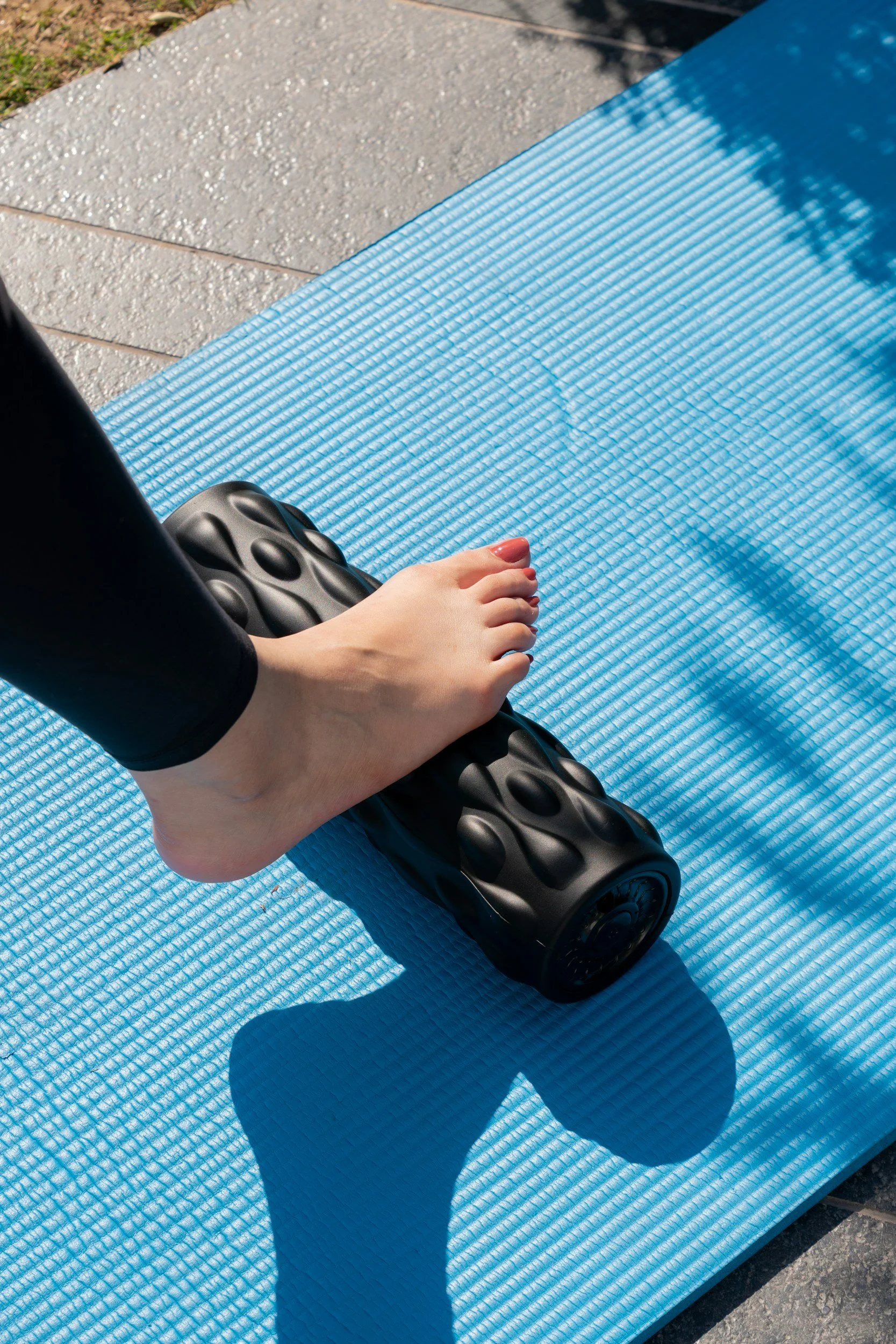
Progressive muscle relaxation
Systematically tensing and releasing muscle groups from feet to face teaches the body to distinguish tension from ease — and gives the restless anxious energy somewhere to go.
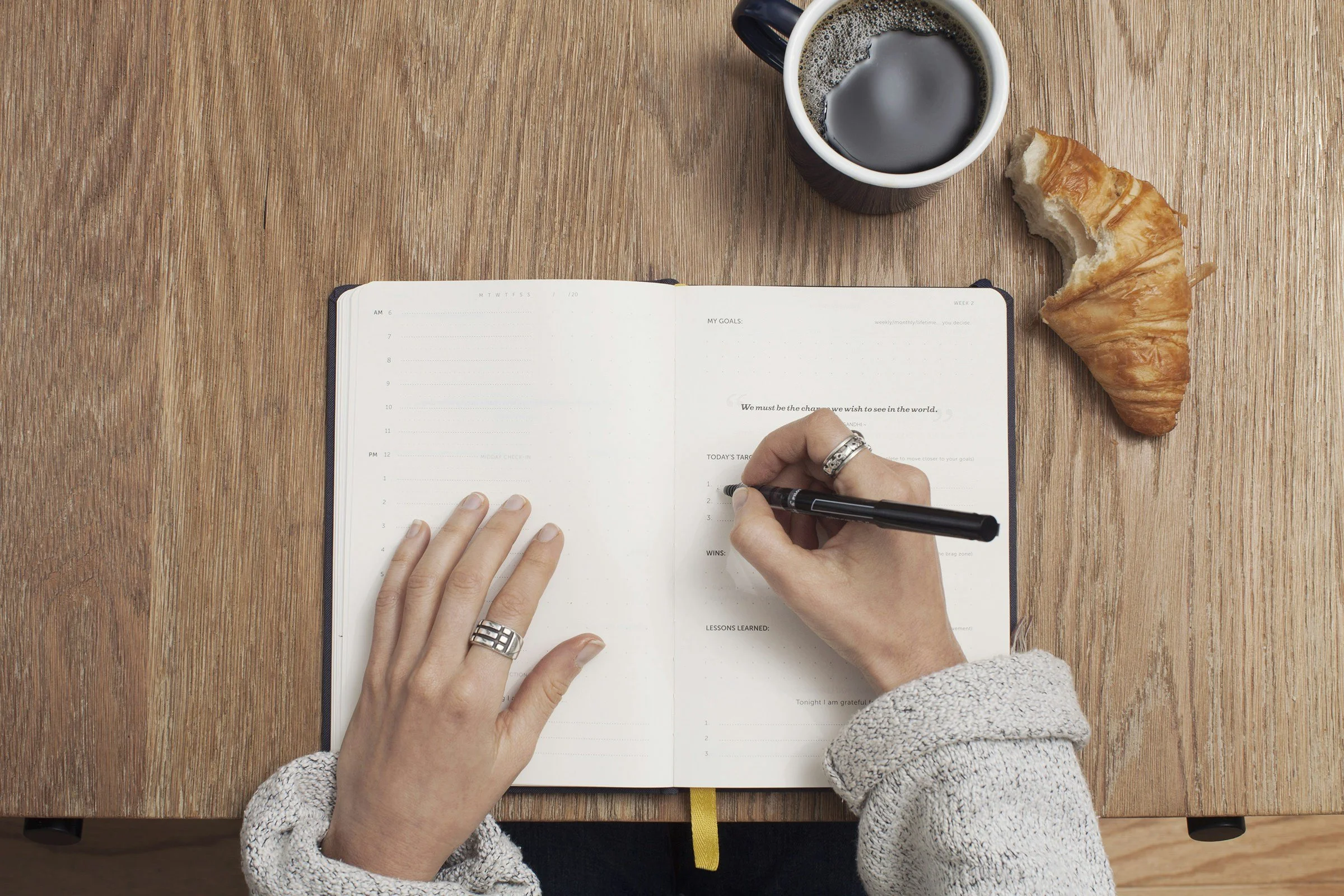
Scheduled worry time
Contain worry by designating 15–20 minutes per day as the only time you’ll engage with anxious thoughts. When worries arise outside that window, note them and redirect. This prevents all-day rumination.

Journaling
Externalizing worry onto paper reduces its cognitive load. Try a simple ‘brain dump’ before bed, or structured prompts: What am I worried about? What’s within my control? What would I tell a friend in this situation?
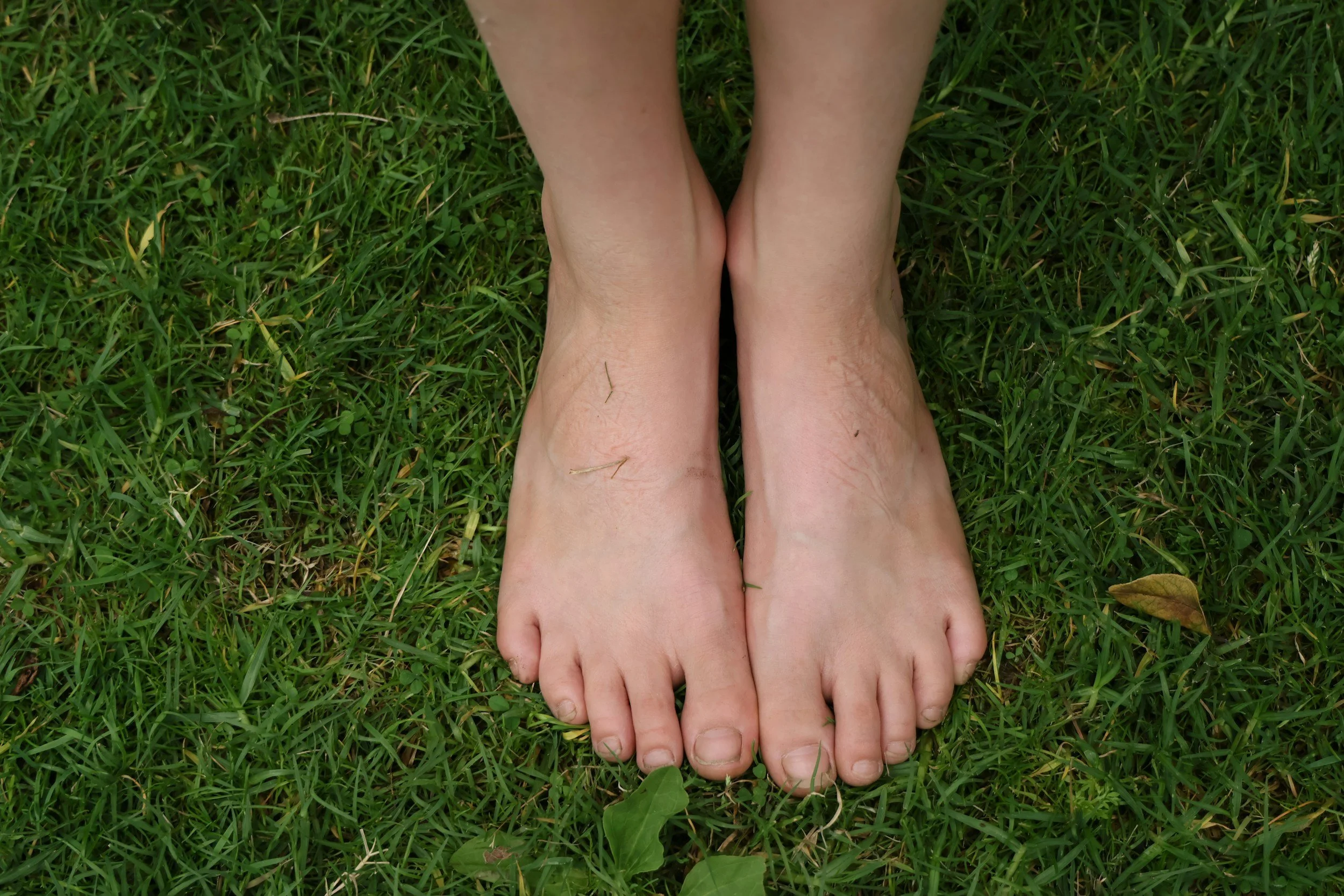
Grounding: the 5-4-3-2-1 method
Name 5 things you can see, 4 you can touch, 3 you can hear, 2 you can smell, 1 you can taste. This brings attention into the present moment and interrupts the anxious thought spiral.

Cognitive defusion
From ACT therapy: instead of ‘I am anxious,’ try ‘I notice I’m having the thought that I’m anxious.’ Creating distance from thoughts reduces their power without requiring you to challenge or change them.

Movement as regulation
Physical activity — particularly rhythmic movement like walking, swimming, or cycling — metabolises stress hormones and resets the nervous system. Even a 10-minute walk meaningfully reduces anxiety.
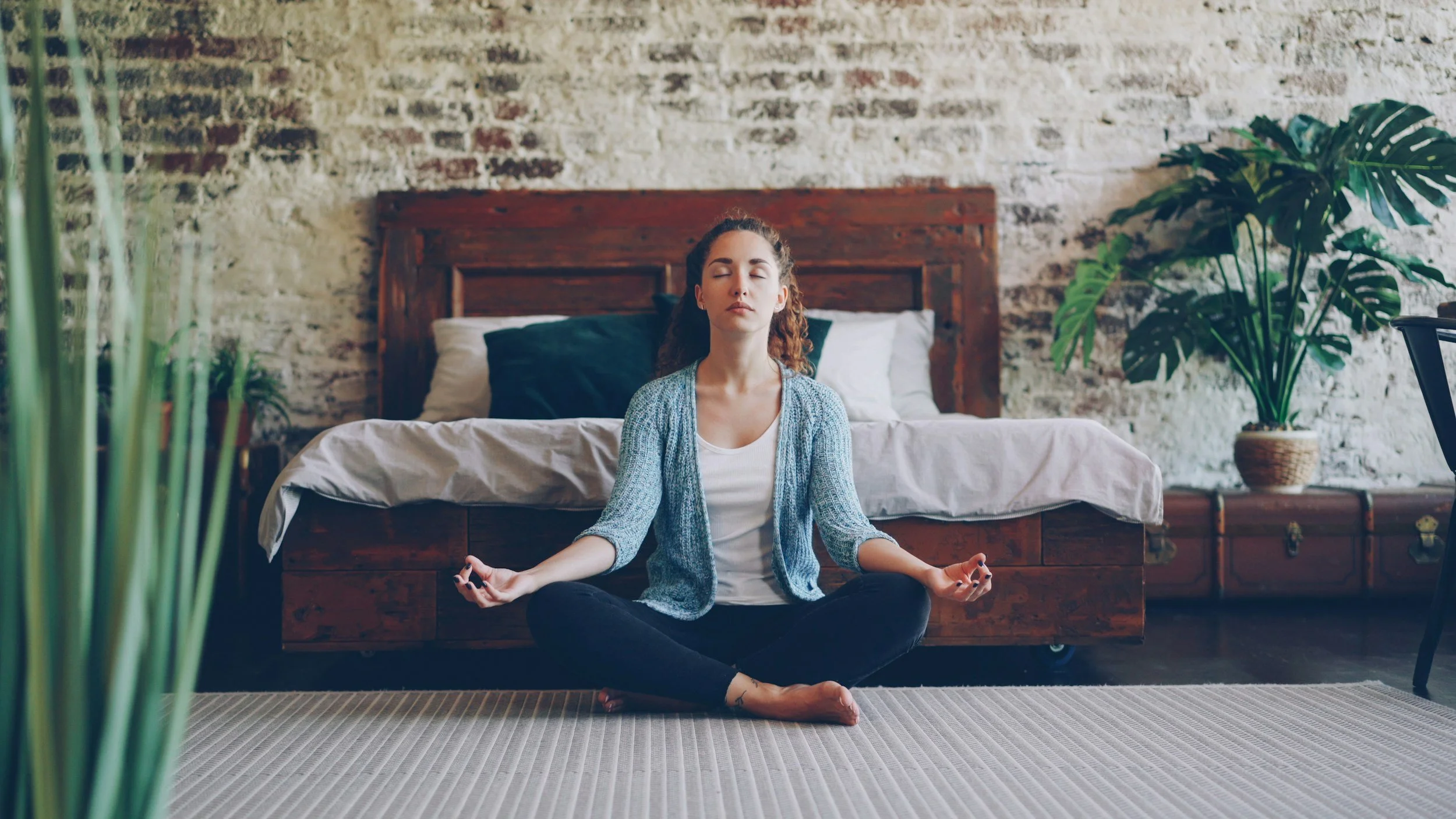
Self-compassion practices
Research by Dr. Kristin Neff shows self-compassion — treating yourself as you’d treat a good friend — significantly reduces anxiety. It deactivates the threat system and activates the soothing system.
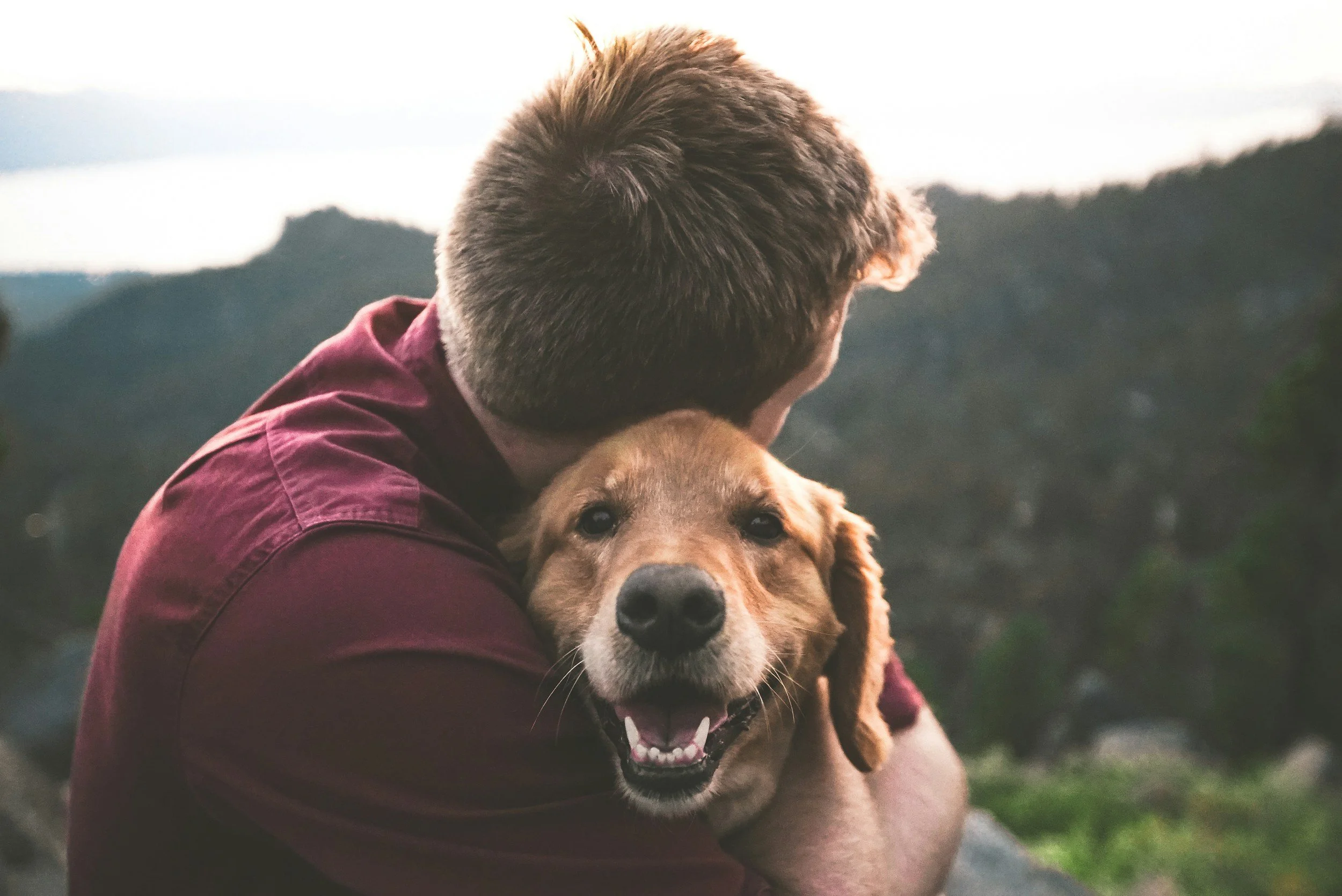
Connection and co-regulation
We are relational beings, and our nervous systems respond to the calm presence of others. Reaching out — a call, a walk with a friend, even a pet — can regulate anxiety in ways that solo strategies cannot.
REST AND RECOVERY
Calming an anxious mind at bedtime
For many people, anxiety peaks at night. The day’s distractions fall away, the body is tired but the mind races, and lying in the dark can feel like an invitation for worry to take over. This is not a character flaw — it is a predictable feature of how the anxious brain works.
The good news is that the bedtime environment is one of the most responsive to intentional change. A consistent wind-down routine signals safety to the nervous system. Over time, these cues become automatic — the brain learns that this sequence ends in sleep, not threat.
“You don’t have to clear your mind to fall asleep. You just have to give it something quieter to rest on.”
Begin winding down 60 minutes before bed
The transition to sleep starts before your head hits the pillow. Dim lights, lower the temperature if possible, and shift away from screens. This is not laziness — it is biology. Blue light suppresses melatonin production, and stimulating content keeps the threat-detection system engaged.
Write it down before you lie down
Keep a notebook beside the bed for a brief brain dump: tomorrow’s tasks, unresolved worries, anything your mind is holding. Research from Baylor University found that writing a to-do list for the next day — not a diary of the day past — helped people fall asleep faster. The act of writing tells the brain it no longer needs to hold the thought.
Use the body to settle the mind
Try a body scan: starting at the feet, bring gentle attention to each part of the body in turn, releasing any held tension as you go. Alternatively, try the 4-7-8 breath: inhale for 4, hold for 7, exhale slowly for 8. The extended exhale activates the vagus nerve and downregulates the stress response.
Resist the urge to problem-solve
The brain at midnight is not the brain you want making decisions. When a worry surfaces, try responding: ‘That’s a real concern. I’ll think about it properly tomorrow.’ Then redirect to a neutral, non-stimulating focus — slow breathing, a visualisation, or a calming audio track.
Try guided imagery or sleep stories
Directing the imagination toward a calm, detailed scene — a forest path, a quiet beach, a familiar safe place — gives the mind something to engage with that is not anxiety. Apps like Calm, Headspace, and Insight Timer offer guided options. Many people find a familiar voice more settling than silence.
If sleep doesn’t come, get up briefly
Lying awake for long periods builds a conditioned association between bed and wakefulness. If you’ve been awake for more than 20–25 minutes, get up and do something quiet and non-stimulating in low light until you feel genuinely drowsy. This protects the bed as a sleep cue rather than an anxiety cue.
A note for clients and families
If anxiety is getting in the way of school, relationships, work, or simply enjoying life, that’s worth talking about. Anxiety responds well to the right support. You don’t have to manage it alone — a nd you don’t have to eliminate it entirely to feel better.
Lisa Mitchell is a Registered Clinical Counsellor at Creative Horizons Counselling, where she works with children, adolescents, and families. If you have questions about sibling sessions or whether they might be a fit for your family, you're welcome to reach out.
Getting Started
If any part of this resonated, consider reaching out to our team.
Creative Horizons Counselling offers a warm, confidential space for families.
Book a consultation here or call us at 778-265-6383.
We are located in Westshore, Victoria, BC.